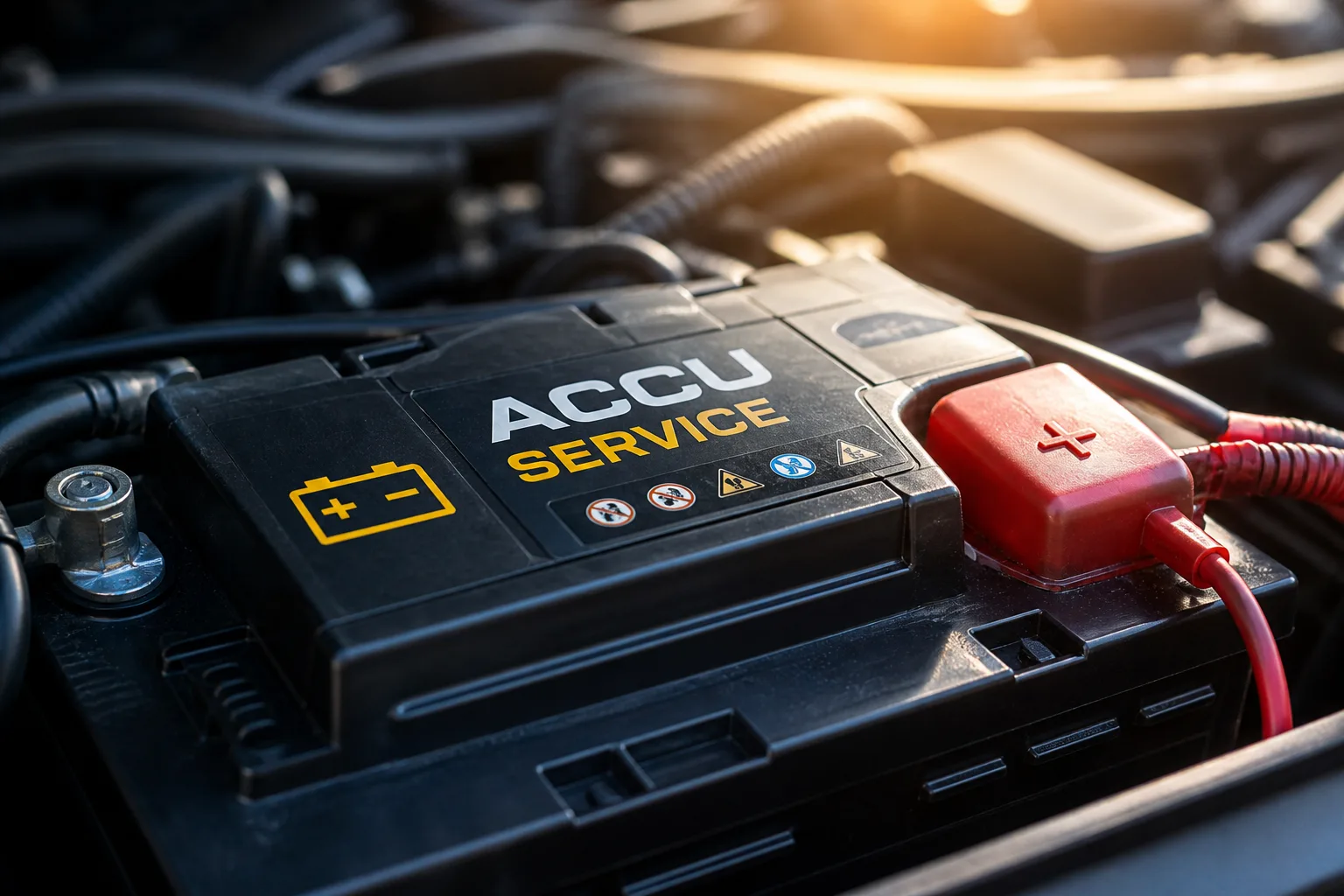
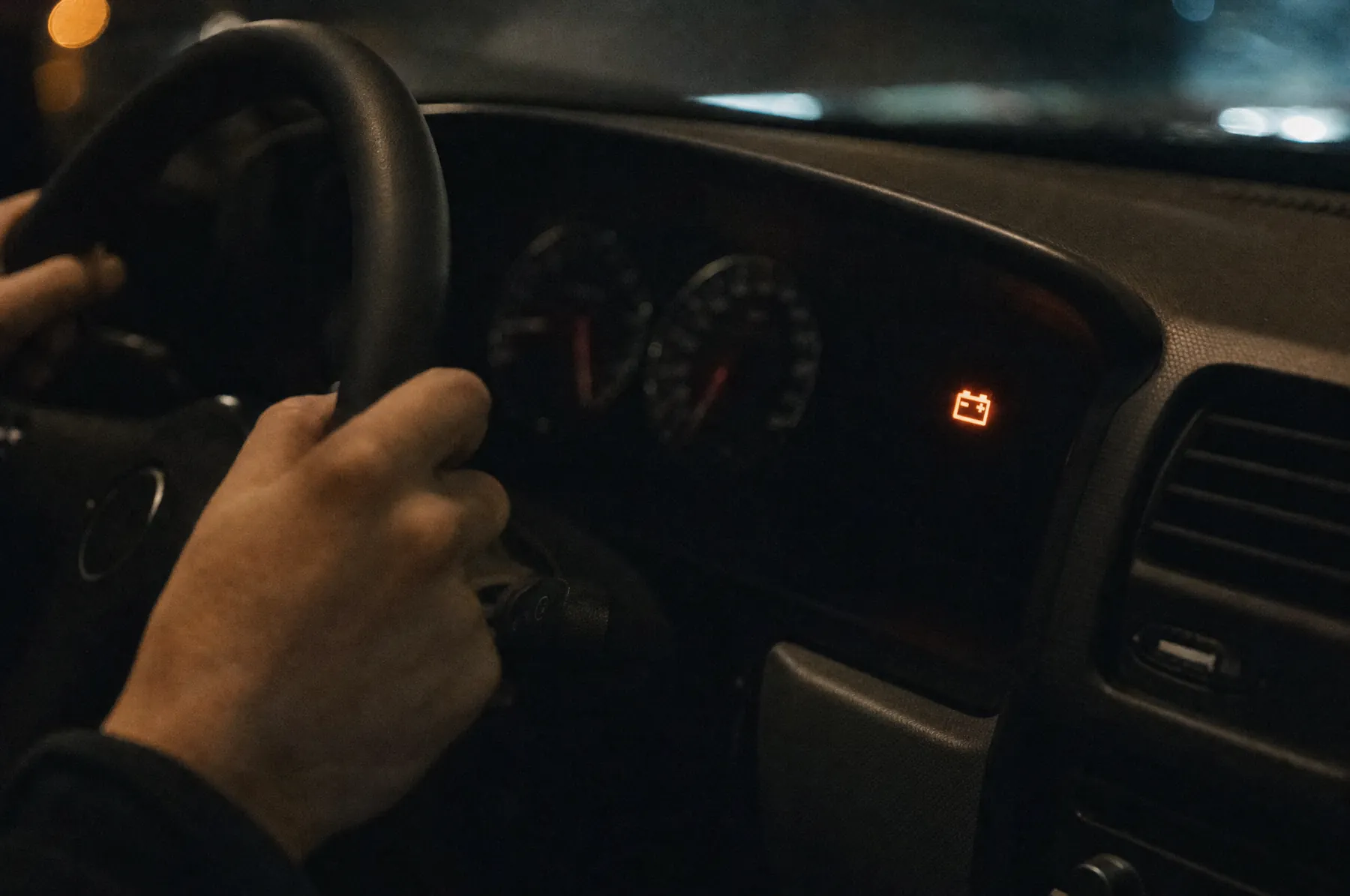
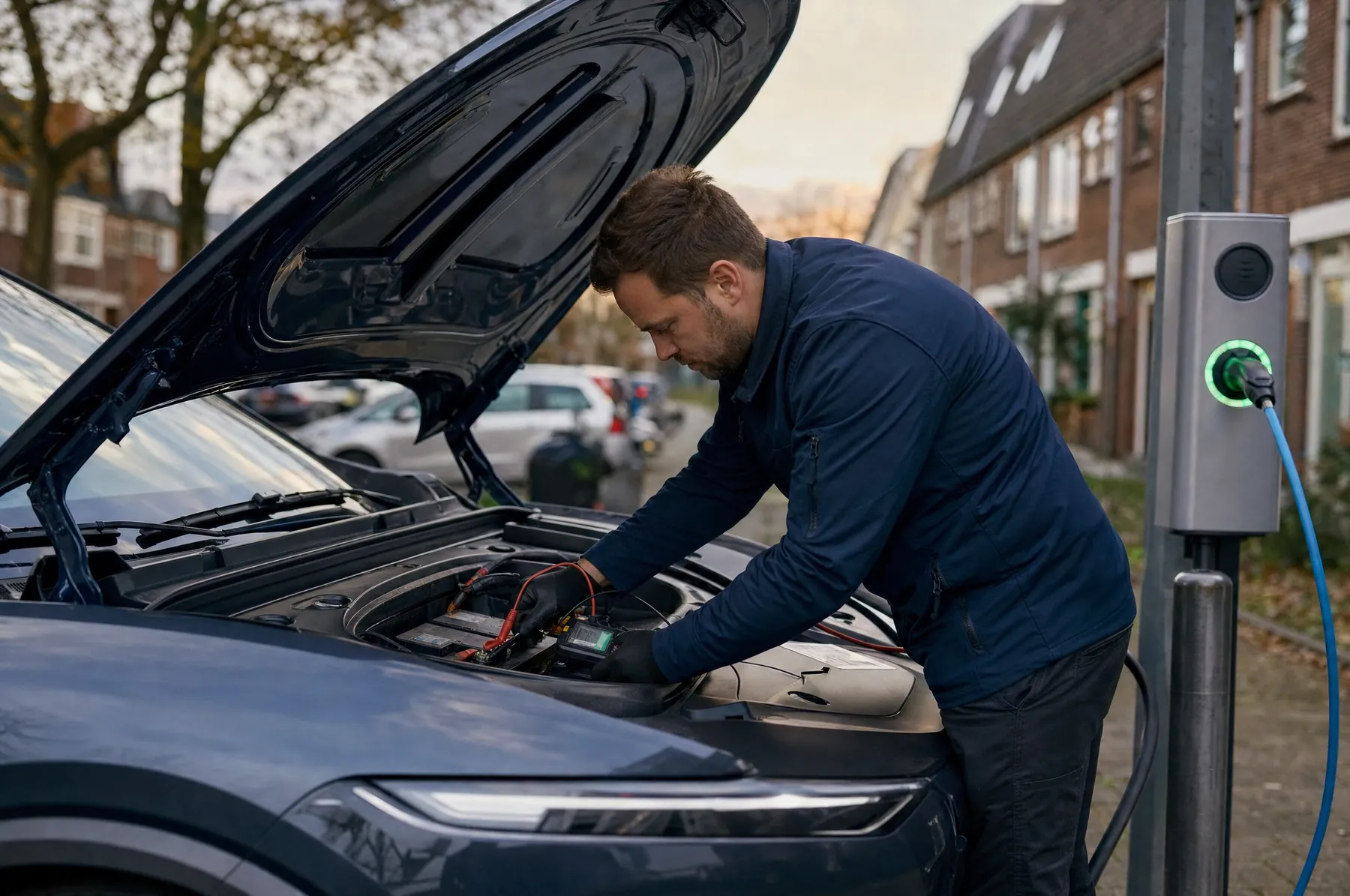
Since roughly 2010 nearly every new car has stop-start. That system asks something entirely different of the battery, which is why two special types exist: EFB and AGM. Fit an ordinary battery and it will fail — not because it is bad, but because it was built for something else.
What stop-start does to a battery
A car without stop-start starts two or four times per journey. With stop-start it restarts at every traffic light: thirty to fifty times per journey. On top of that, radio, air conditioning and lighting keep running with the engine off, so the battery supplies power with nothing charging it.
EFB: the entry level
EFB stands for Enhanced Flooded Battery — still a flooded battery at heart, but with reinforced plates and an extra fleece holding the active material in place. It tolerates roughly twice the cycles of an ordinary battery. Usually found in smaller cars with simple stop-start and no regenerative braking.
AGM: for heavier systems
AGM stands for Absorbent Glass Mat: the acid is held in glass fleece mats rather than sitting free. That makes it leak-proof, vibration resistant and far better at deep discharge and rapid recharge. AGM is required once the car recovers braking energy or the battery sits in the cabin or boot.
The rule to remember
You may replace EFB with AGM. You may not replace AGM with EFB. A car built with AGM has a charging system tuned for AGM, and an EFB will fail in it.
And then registration
On nearly all stop-start cars the new battery must be registered in the on-board computer with the right type and capacity. Skip it and the car keeps charging to the profile of the old, worn battery.